The 2019 Revision of The International Standards for Neurological Classification of Spinal Cord Injury (ISNCSCI) and the Expedited ISNCSCI Exam (E-ISNCSCI) |
Friday, July 17, 2020
|
1 CME Available
|
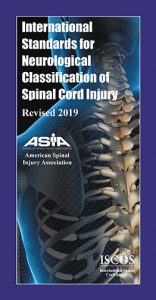
ABOUT THE WEBINARThe International Standards for Neurological Classification of Spinal Cord Injury (ISNCSCI) published by ASIA and continuously maintained by the International Standards Committee represents the gold standard assessment for determination of the level and severity of a spinal cord injury (SCI). In 2019, a new ISNCSCI revision was released, which introduces two new concepts that will be discussed in the webinar: 1) a new taxonomy for documentation of non-SCI related impairments such as peripheral nerve lesions or pain, and defines classification rules in the presence of such non-SCI conditions; and 2) the definition of the Zone of Partial Preservation (ZPP) has been changed and ZPPs can now be used not only in complete lesions, but also in cases of incomplete injuries (ASIA Impairments Scale Grades B, C or D) with absent motor or sensory function in the most caudal sacral segments. In February 2020, the Expedited ISNCSCI (E-ISNCSCI) was published on the ASIA website. The E-ISNCSCI was developed to provide a more rapid option for determination of the Neurological Level of Injury (NLI) and ASIA Impairment Scale (AIS). Typically, the E-ISNCSCI will allow at least 75% of the sensory and motor exam components to be omitted. Use of the E-ISNCSCI exam is appropriate in some clinical or research situations, but it is not intended to replace the full ISNCSCI exam, and its use requires knowledge of and training in the full ISNCSCI Exam. The educational level for this learning activity is intermediate/advanced. Basic knowledge about ISNCSCI is needed. |
ABOUT THE PRESENTERDr. Rüdiger Rupp, Senior Scientist and Head of Section Experimental Neurorehabilitation, Spinal Cord Injury Center, Heidelberg University Hospital Dr. Rüdiger Rupp received the Dipl.-Ing. degree in electrical engineering with focus on biomedical engineering and his Dr.-Ing. degree from the Technical University of Karlsruhe, Germany, in 1994 and 2008, respectively. In 2018, he received his habilitation (venia legend) from Heidelberg University in “Experimental Neurology”. After working at the Institute for Biomedical Engineering and Biocybernetics of Technical University of Karlsruhe, he began work at the Spinal Cord Injury Center (Head: Prof. N. Weidner) of Heidelberg University Hospital, Germany, where he holds the position as the head of the Experimental Neurorehabilitation group. His main research interests are in the field of rehabilitation engineering for spinal cord injured patients. This includes neuroprosthetics mainly of the upper extremity, man-machine interfaces, gait analysis, development and clinical validation of novel methods and devices for locomotion therapy and realization of software projects for standardized documentation of rehabilitation outcome. He is chair of ASIA and ISCoS International Standards Committee and was responsible for the 2019 ISNCSCI revision. Stephen Burns, MD Dr. Stephen Burns graduated from Brown Medical School in 1992 and completed residency in Physical Medicine and Rehabilitation at Thomas Jefferson University in 1996. He joined the faculty of the Department of Rehabilitation Medicine at the University of Washington School of Medicine in 1996, and he currently holds the rank of Associate Professor in the Clinician-Educator Track. In 1996 he joined the medical staff of the VA Puget Sound Health Care System in Seattle, WA, serving as a Staff Physician on the SCI Unit. Since 2012 he has served as Director of the SCI Service at VA Puget Sound. His main research interests are the neurological classification of SCI and the medical consequences of chronic SCI, including infectious disease conditions, respiratory complications, and osteoporosis. He is a former chair of the ASIA International Standards Committee, has served on the committee since 2001, and led the subcommittee that developed the E-ISNCSCI. He serves on the Steering Committee for the Consortium for Spinal Cord Medicine and has been a member of multiple clinical practice guideline development panels. He is leading efforts to harmonize content of the VA SCI patient registry with the International SCI Data Sets as the US Department of Veterans Affairs transitions to a Cerner-based electronic medical record. |
CONTINUING EDUCATION CREDIT – CMEThis activity has been planned and implemented in accordance with the accreditation requirements and policies of the Accreditation Council for Continuing Medical Education (ACCME) through the joint providership of The Institute for Medical Studies and ASIA. The Institute for Medical Studies is accredited by the ACCME to provide continuing medical education for physicians. The Institute for Medical Studies designates this live activity for a maximum of 1 AMA PRA Category 1 Credit(s)™. Physicians should claim only the credit commensurate with the extent of their participation in the activity. |